Why kitesurf the Grenadines by boat?
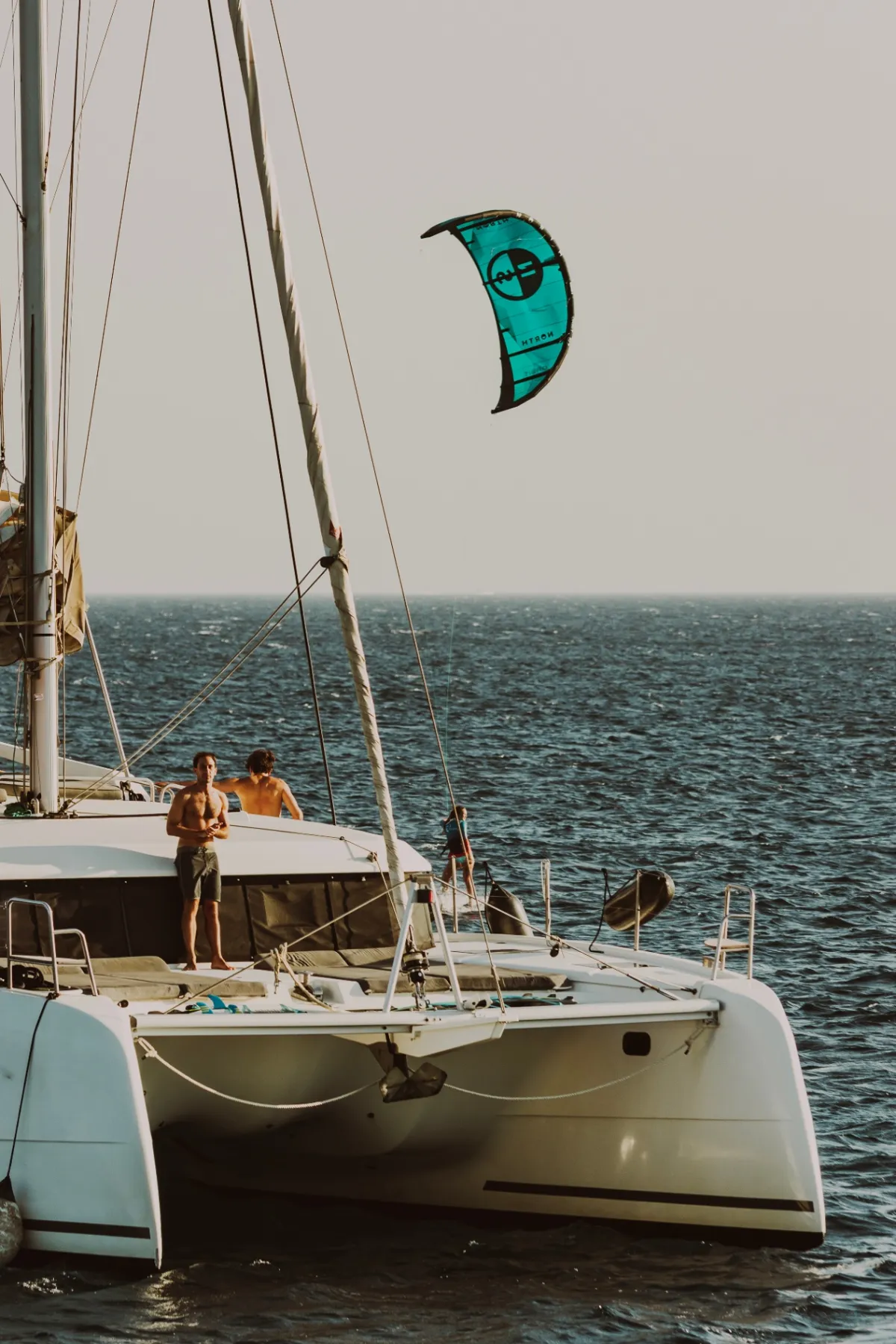
A kitesurf catamaran trip in the Grenadines connects riding with the quieter pleasures between sessions: sailing to a new anchorage, swimming, snorkelling and sharing meals on board. Our small-group sailing adventures reach places that are difficult to visit without a boat. Rather than promising a fixed number of sessions, think of the boat as a mobile base: the skipper reviews weather and safety each day, then chooses the route and water activities. Wind is never guaranteed. The crew may alter the plan for conditions, and a windless day is part of a sailing holiday, not a refundable missed session. For current inclusions and live dates, check the Caribbean season page and FAQ. A boat-based itinerary can also make non-kiting time part of the destination rather than a transfer back to accommodation. Expect a balance of activities, not a resort timetable. Conditions, anchorage restrictions and the needs of everyone aboard take priority over chasing a named spot.
Tobago Cays, Union and the nearby cays
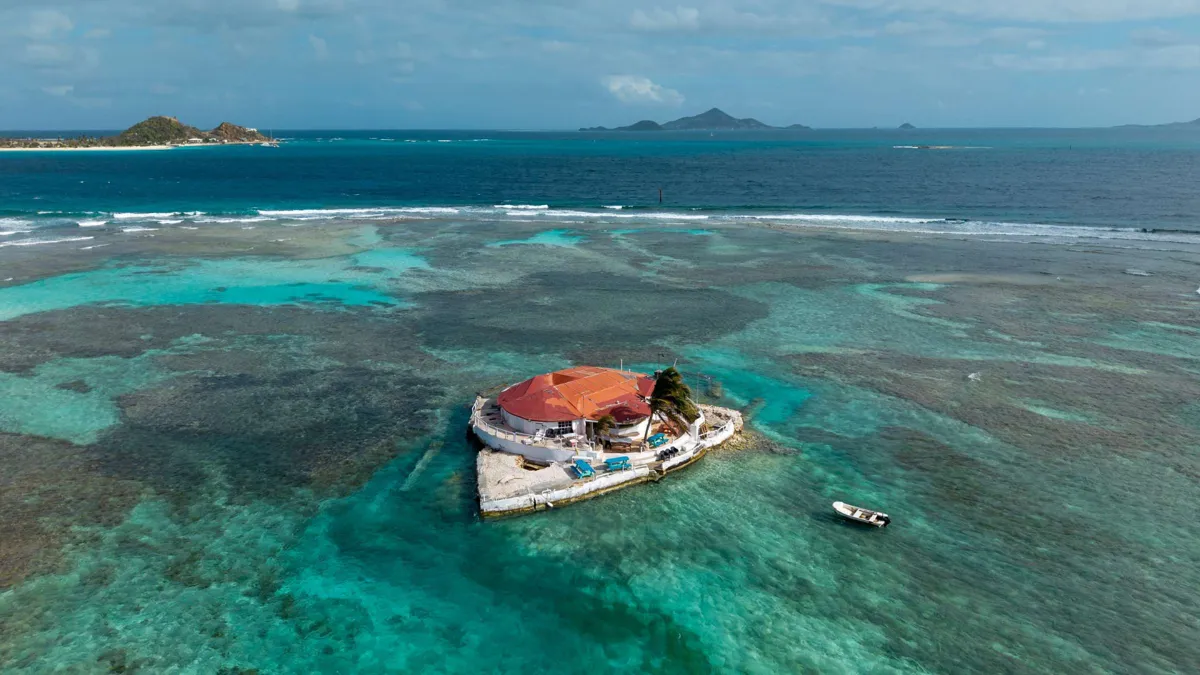
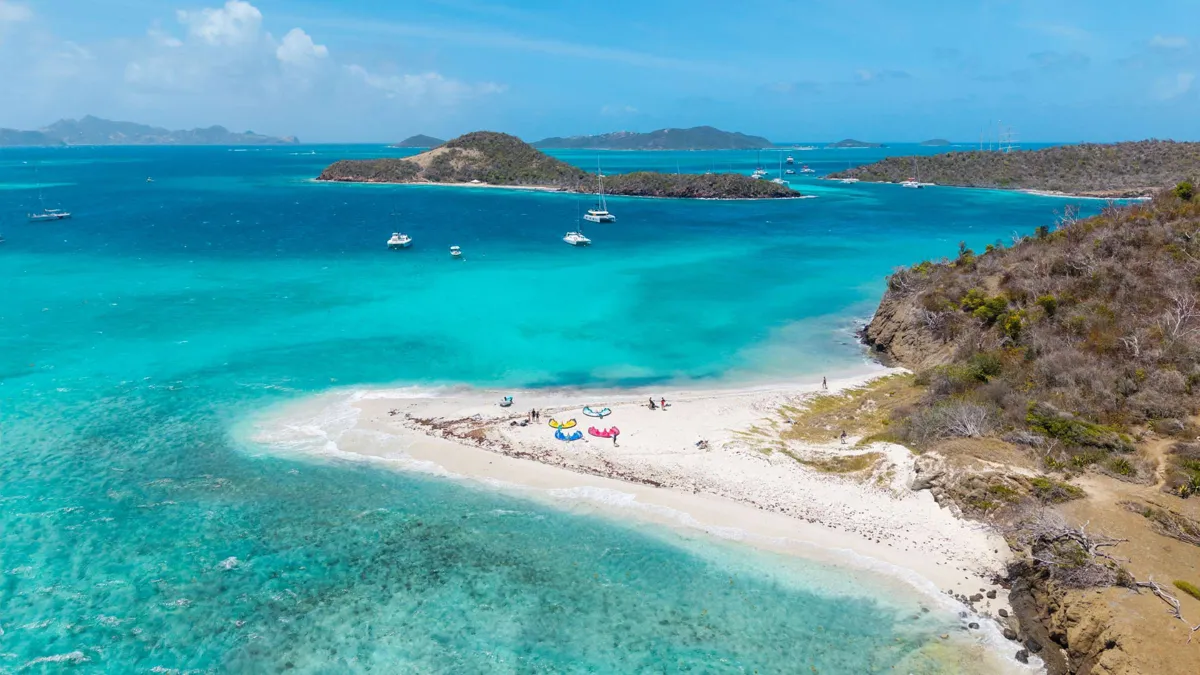
Our Grenadines itinerary includes Tobago Cays, Union, Mayreau and kite stops including Frigate and Morpion. These are not interchangeable beach spots: wind direction, reef, depth and access all affect where the crew can safely operate. Tobago Cays is a protected marine area; the Government of St Vincent and the Grenadines highlights its reef-protected islets and asks visitors to protect this natural resource. The country’s tourism authority also identifies Tobago Cays as a popular kitesurfing destination. Official tourism information supports the destination claim, but does not establish that a particular anchorage or session will be available on a given day. Follow local rules and crew instructions, especially around reefs and wildlife. Tobago Cays is a wildlife reserve, so responsible visits matter as much as the session. Do not disturb animals or damage coral, and follow the crew’s guidance about anchoring, launching and where to swim. An attractive lagoon does not mean every activity is appropriate in every condition. Petit Tabac is also part of our illustrative exploration of the Tobago Cays. Treat this small island as an anchorage and nature stop first; launching and riding depend on the conditions and crew guidance.
Trade winds and the season
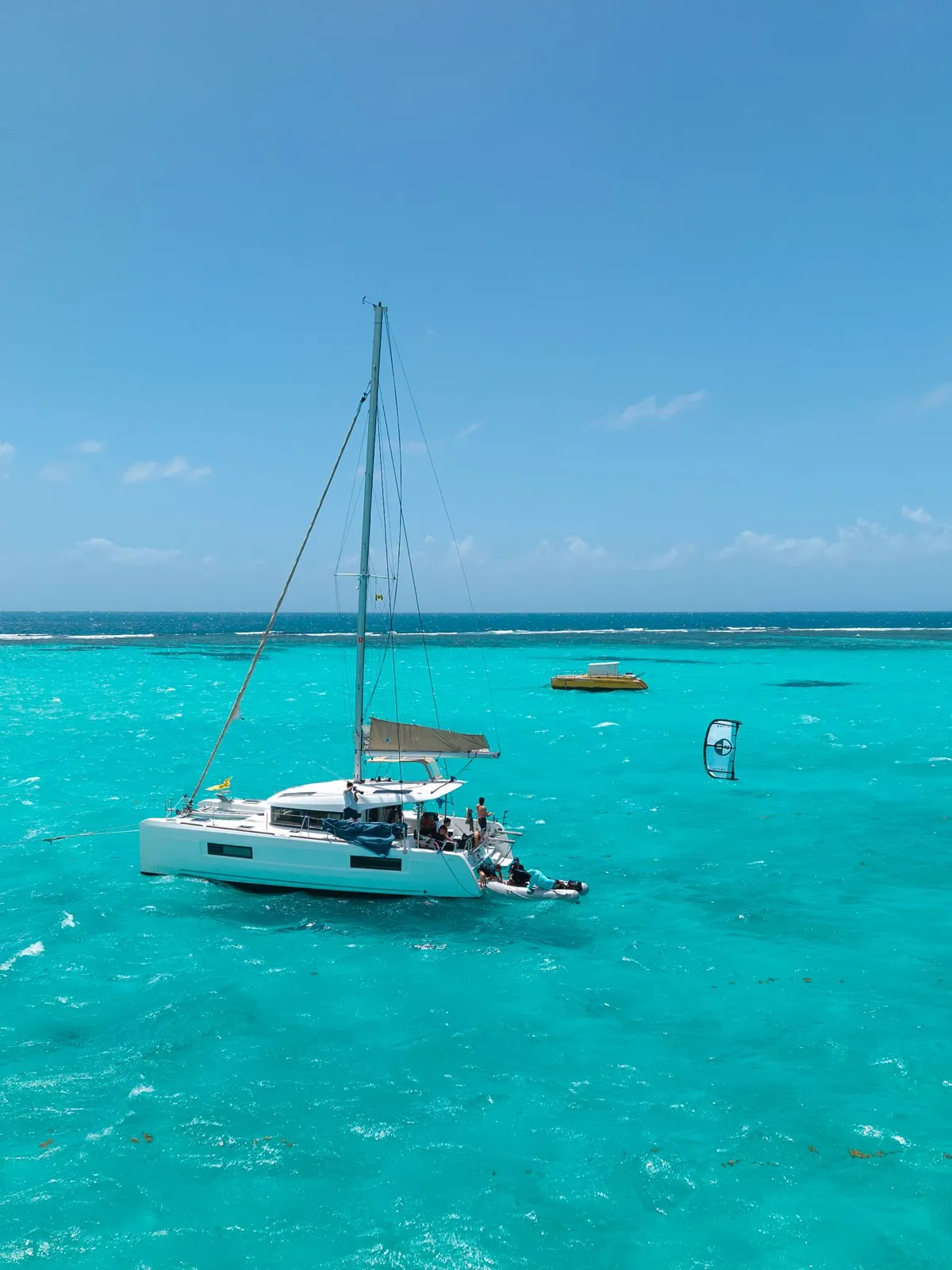
Our Caribbean guidance describes northeasterly trade winds as typically steady from February to April, while making clear that wind is never guaranteed. Use this as a broad seasonal guide, not a forecast or promise: weather varies, and the skipper makes the daily decision. Compare current trip dates with your own schedule and ask about the planned route for the week you are considering. See live Grenadines dates and availability. Seasonal patterns help with planning, but local effects and short-term weather matter more for a particular session. Pack for warm-weather sailing, hydration and sun protection, and leave room for flexibility rather than expecting every day to follow a standard pattern.
Getting there via SVD
We recommend flying to Argyle International Airport in St Vincent (SVD), often connecting via Barbados or St Lucia; flight costs and transfers are not included, and the team helps plan the connection. The airport’s own site identifies Argyle International as SVD. Airport source confirms the airport name and code, but routes and schedules change: verify directly with airlines before booking, allow sensible connection time, and do not assume the boat can wait for delayed flights. Joining instructions provide the exact meeting place and time. SVD is on St Vincent, while the yacht’s meeting point is confirmed in your joining instructions; the onward transfer arrangement depends on the itinerary. Confirm arrival details and baggage limits before departure, especially if travelling with kite equipment. Flights and airport-to-boat transfers remain the traveller’s responsibility.
What a week aboard actually means
On board you will find shared double cabins, chef-cooked meals, sailing and optional ways to help with the boat. Riders who can ride upwind independently tend to get the most from the trip; beginners may be accepted in limited numbers with dedicated coaching, so contact the team before booking. Gear rental and lessons are add-ons. Travel insurance is compulsory and must cover cancellation, medical evacuation, search and rescue, and the activities you plan to do. Explore the on-board experience, read the full FAQ, and check current season availability before arranging flights. The shared nature of the trip makes communication useful: mention dietary needs, experience, health concerns and cabin requests early. The crew can explain what is practical for the boat and week. For details that affect a booking, rely on the published conditions and direct confirmation rather than this overview. Compare Grenadines catamaran weeks, Cyclades sailing weeks and our booking and travel FAQ to choose the right destination.